21/09/2026
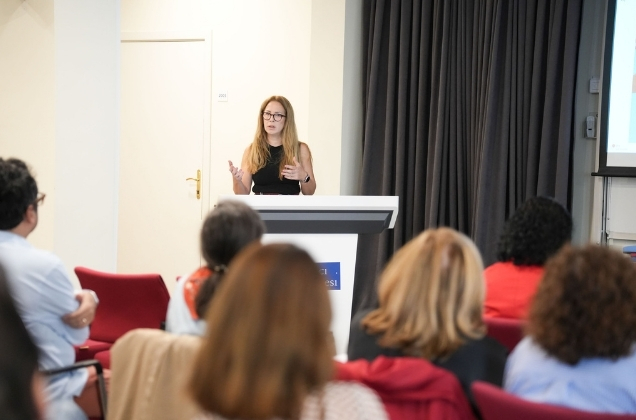
Sabancı University Istanbul Policy Center (IPC) hosted Prof. Dr. Ayşe Zarakol, a prominent scholar in the field of international relations, for a talk titled "Global Politics in the 21st Century in the Shadow of Artificial Intelligence." At the event, held on Thursday, September 17, 2026, at the Minerva Han Prof. Dr. Fuat Keyman Meeting Hall, Zarakol assessed the effects of artificial intelligence on global politics and the risks it entails.
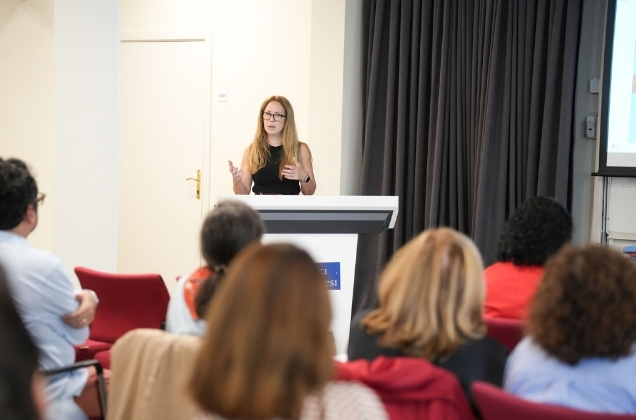
The opening remarks were delivered by Prof. Dr. Senem Aydın-Düzgit, Dean of the Sabancı University Faculty of Arts and Social Sciences and Director of the Istanbul Policy Center.
"There Are At Least Four Factors Distinguishing the 21st Century from the 20th Century"
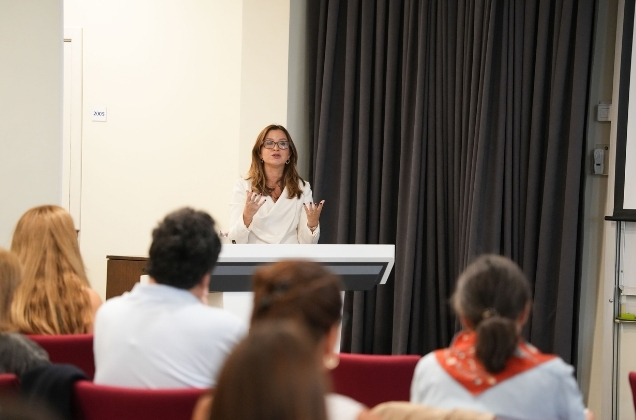
Prof. Dr. Ayşe Zarakol, Professor of International Relations at the University of Cambridge’s Department of Politics and International Studies (POLIS) and Adjunct Faculty Member at the Sabancı University Faculty of Arts and Social Sciences, began her speech by discussing the disorder currently characterizing global politics. Noting that interpreting the transformation of the international system solely through the lens of the great power rivalry between the US and China would be incomplete, Prof. Dr. Zarakol said, "This is not an incorrect argument, but in my view, it is an incomplete one. There are at least four factors that distinguish the 21st century from the 20th century."
Prof. Dr. Ayşe Zarakol identified the transformation of 20th-century institutions and political structures, the shift of states toward structures increasingly shaped around individuals, the rise of the Global South, and structural changes in climate and technology as key factors defining 21st-century global politics.
How Will Artificial Intelligence Change Global Politics?
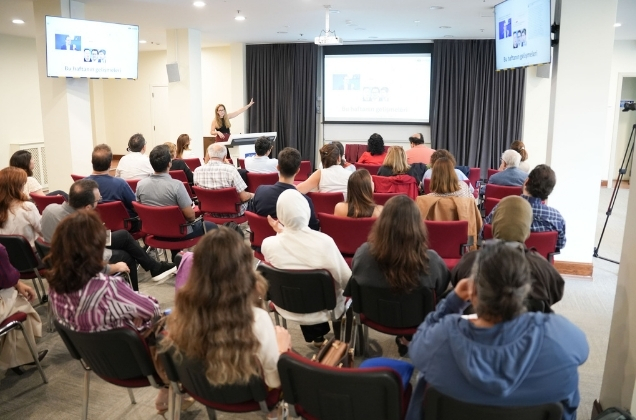
Focusing her talk on technological transformation, and artificial intelligence in particular, Prof. Dr. Ayşe Zarakol highlighted the rapid pace of developments in this field. Assessing the current state of artificial intelligence and ongoing debates surrounding the technology, Zarakol examined the potential new forms of disorder it could introduce to global politics, analyzing their short-, medium-, and long-term effects.
Noting that artificial intelligence is perceived primarily as a positive technological development in Türkiye, Prof. Dr. Ayşe Zarakol pointed out that the associated risks are not being sufficiently discussed. "In my view, the risks are hardly discussed in Türkiye at all," Zarakol said. "The risks are higher for countries like Türkiye, and they are high for the world as well."
The event concluded with a Q&A session where Prof. Dr. Ayşe Zarakol answered questions from the audience following her presentation.